What sort of person can succeed in a business world dominated by public companies trying to eat your lunch? Edward “Ned” Johnson III, who built Fidelity into one of America’s largest private companies, was described by Joshua Berman, his longtime legal adviser, as “passionately curious.” Justin Baer, the author of The House of Fidelity, wrote of Johnson’s life and passions:
Boston’s richest man lived for nearly half a century in the same Beacon Hill townhouse, located a short walk from Fidelity’s old offices on Devonshire Street. He gave to dozens of institutions that supported the arts and medical research, but there are no art museums, hospitals or libraries that bear his name.
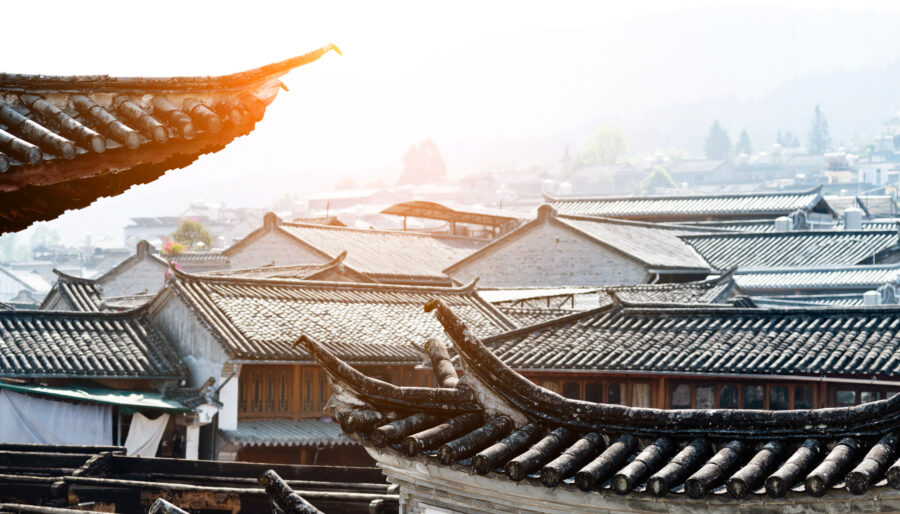
Mr. Johnson shared his father’s fascination with Asian culture, spending a month or more each year trekking through Japan or China.
The younger Mr. Johnson was a significant art collector, with a particular interest in New England furniture. For years, he carried a flashlight to examine the joinery of any Chippendale pieces he had come across.
He founded the Brookfield Arts Foundation, owned several hundred grandfather clocks, and once had an entire two-story house disassembled in China and flown, in more than 2,000 pieces, to a museum in Salem, Mass.
“He was a very, very unusual man,” said Mr. Berman, the legal adviser. “He was passionately curious about just about anything.”
Action Line: You can still visit the Chinese building Johnson had moved to America at the Peabody Essex Museum (PEM). The exhibit, Yin Yu Tang (Hall of Plentiful Shelter), A Chinese Home, was built during the Qing Dynasty and moved by Johnson and donated to the museum at 161 Essex Street in Salem, MA. If you’re going to be visiting New England to see Yin Yu Tang and want to discuss your investment portfolio, email me at ejsmith@yoursurvivalguy.com.
P.S. For more about Yin Yu Tang, watch the video below: