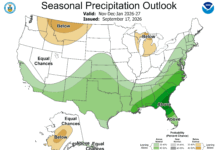
You may remember back in 2021 when Texas suffered a terrible power outage after renewable power systems in the state weren’t able to keep up with surging demand for electricity during a deep freeze. The next year, another deep freeze hit Texas, but thankfully, the damage wasn’t as bad.
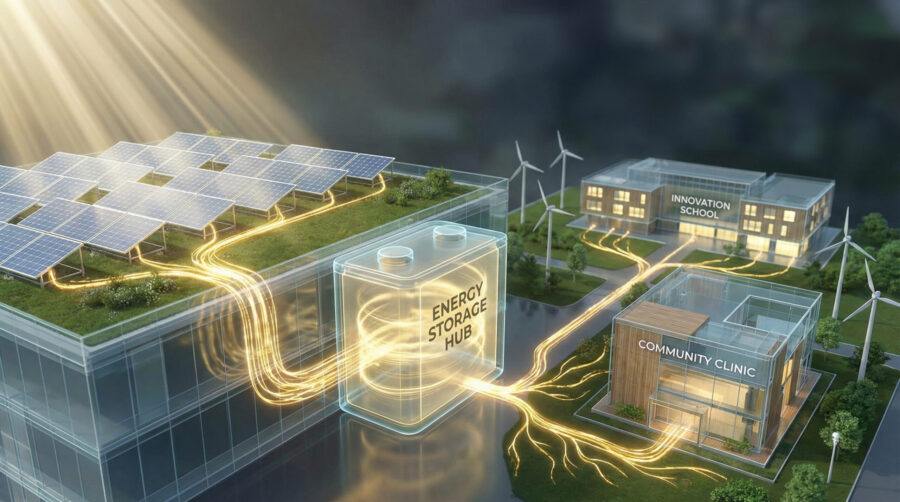
Texas has great wind and solar potential, and both forms of power generation have grown rapidly in the state. But without a way to store any of the energy generated by the renewables, it must still rely on natural gas and coal power plants to pick up the slack when demand is high, and renewable production is low. Battery energy storage systems, (BESS) could be part of the solution to Texas’s issues. The Institute of Electrical and Electronics Engineers (IEEE) explains BESS, writing:
As renewable generation scales, grids need flexible tools to match production with round‑the‑clock demand.
Battery Energy Storage Systems (BESS) store surplus electricity and deliver it within seconds, converting variable output into dependable capacity, balancing supply and demand, cutting peak costs, and strengthening resilience during extreme weather and outages.
Two forces make BESS indispensable today.
- First, costs have fallen sharply:
Average lithium‑ion battery pack prices reached $115/kWh in December 2024, down 20% since 2023, accelerating project viability.- Second, deployment is scaling rapidly:
U.S. utility‑scale battery capacity more than doubled in 2023 and is on track to more than double again, driven by solar‑plus‑storage with four‑hour durations.Globally, storage is widely recognized as core grid flexibility for integrating higher shares of renewables while maintaining reliability.
BESS Value and Safety
As variable renewables continue to expand, BESS will play a major role in strengthening grid reliability and flexibility by supplying fast frequency regulation, rapid ramping, voltage support, spinning reserve, and black‑start services.By enabling peak shaving and load shifting, BESS can move energy from low‑cost hours to high‑demand periods that results in reduced prices, eases energy congestion, and defers costly transmission and distribution upgrades.
When co‑located with solar and wind, BESS can transform variable output into firm, scheduled delivery, improving capacity value and cutting curtailment that would otherwise waste clean energy.
In addition, BESS‑powered microgrids can provide backup during outages, system restart capability, and steadier power quality in remote access areas.
Earning public trust and securing financing for deployments starts with demonstrated safety and code compliance. BESS projects follow NFPA-based rules, and they must obtain system safety certifications that test worst-case battery failures. They also add practical protections like ventilation, gas and fire detection, remote monitoring, and coordinated firefighter plans, which help win permits, insurance, and community support.
Action Line: The same logic behind adding stored power to the grid applies to your own power at home. If you have solar, or live in an area with frequent outages, having battery backups can add to your energy security. Click here to subscribe to my free monthly Survive & Thrive letter.
Read the entire series here.