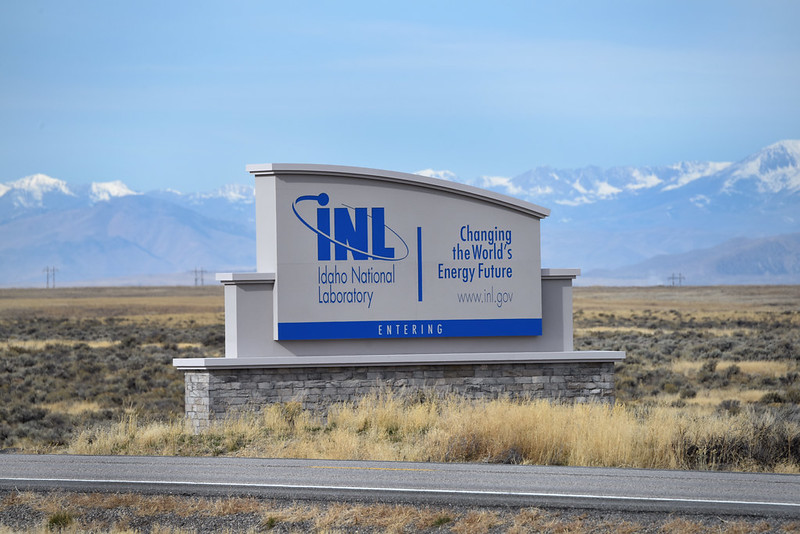
Scientists at the Idaho National Laboratory have produced fuel for a molten chloride reactor for the first time. The breakthrough technology could lead to safer, more efficient nuclear power. Donna Kemp Spangler of Idaho National Laboratory writes:
Scientists at the Idaho National Laboratory (INL) have achieved a historic breakthrough in nuclear energy by launching full-scale production of enriched fuel salt for the Molten Chloride Reactor Experiment (MCRE)—the world’s first test of a molten chloride salt fast reactor.
“This is the first time in history that chloride-based molten salt fuel has been produced for a fast reactor,” said Bill Phillips, technical lead for salt synthesis. “It’s a major milestone for American innovation and a clear signal of our national commitment to advanced nuclear energy.”
The MCRE project is a public-private collaboration between Southern Company, TerraPower, CORE POWER, and the U.S. Department of Energy to demonstrate advanced nuclear technologies, and shows promise in the maritime market. It is the first planned reactor experiment to be hosted at the Laboratory for Operation and Testing in the United States (LOTUS) test bed, which DOE’s National Reactor Innovation Center is building at INL. Operations are expected to begin as soon as 2030.
Unlike traditional reactors that use solid fuel rods and water as a coolant, most molten salt reactors rely on liquid fuel—a mixture of salts containing fissile material. This design allows for higher operating temperatures, better fuel efficiency, and enhanced safety. It also opens the door to new applications, including compact nuclear systems for ships and remote installations.
“The Molten Chloride Fast Reactor represents a paradigm shift in the nuclear fuel cycle, and MCRE will directly inform the commercialization of that reactor. Working with world-leading organizations such as INL to successfully synthesize this unique new fuel demonstrates how real progress in Gen IV nuclear is being made together,” said Jeff Latkowski, senior vice president of TerraPower and program director for the Molten Chloride Fast Reactor.
“The implications for the maritime industry are significant,” said Don Wood, senior technical advisor for MCRE. “Molten salt reactors could provide ships with highly efficient, low-maintenance nuclear power, reducing emissions and enabling long-range, uninterrupted travel. The technology could spark the rise of a new nuclear sector—one that is mobile, scalable and globally transformative.
“With substantial private sector investments, including from the maritime industry, and with continued funding support from the DOE, this milestone accelerates completion of the MCRE, unlocking a new era of nuclear propulsion for a revitalized U.S. merchant shipping fleet that can compete head-on with China,” says Mikal Boe, CEO of CORE POWER.
Action Line: America needs more power to fuel the AI boom and to lower costs for consumers and industrial customers. The nuclear renaissance aims to fill the needs of American energy buyers, and molten chloride salt fast reactors could contribute to achieving that goal. Click here to subscribe to my free monthly Survive & Thrive letter.
P.S. Read more about the nuclear renaissance here:
- America’s Nuclear Renaissance Is Being Driven by AI
- Could the Nuclear Renaissance Begin in Michigan?
- Will AI Cause a Nuclear Renaissance?
- The Gas to Nuclear Waste Power Pipeline
- Generators Working Hard to Revive Dormant Nuclear
- Is Google Pioneering the Future of Nuclear Power?
- New Nuclear Pact Signed