The news today is filled with potential problems for your power security. For starters, Canadian politicians are rattling their sabers over tariffs, calling for power cuts to Americans in retaliation against President Trump’s announced tariffs on Canadian goods.
If you live in an area of the United States close to Canada, that could be a problem. Canada exported a net 3.6TwH of electricity to the United States in June.
Regional grids like that of New England (ISONE), New York (NYISO), the Midwest, and West, use a lot of Canadian power. And the renewable standards in place in many of those areas are reliant on Canadian hydro power.
With any loss of Canadian power, blackouts could sweep across heavily populated northern regions of the United States, leaving those without some power in their “pantry” in the dark. Ontario Premier Doug Ford threatened to cut off power to the United States and warned that President Trump “better have a pack of batteries.” Good advice.
But it’s not only the north that’s in trouble today. In the Southwest, electricity generated by the Colorado River is at risk. Lake Powell and Lake Mead, which feed the Glen Canyon Dam and the Hoover Dam, respectively, are running out of water. If the water gets too low, the electric turbines turned by the flow will cease, and power will run out. What then?
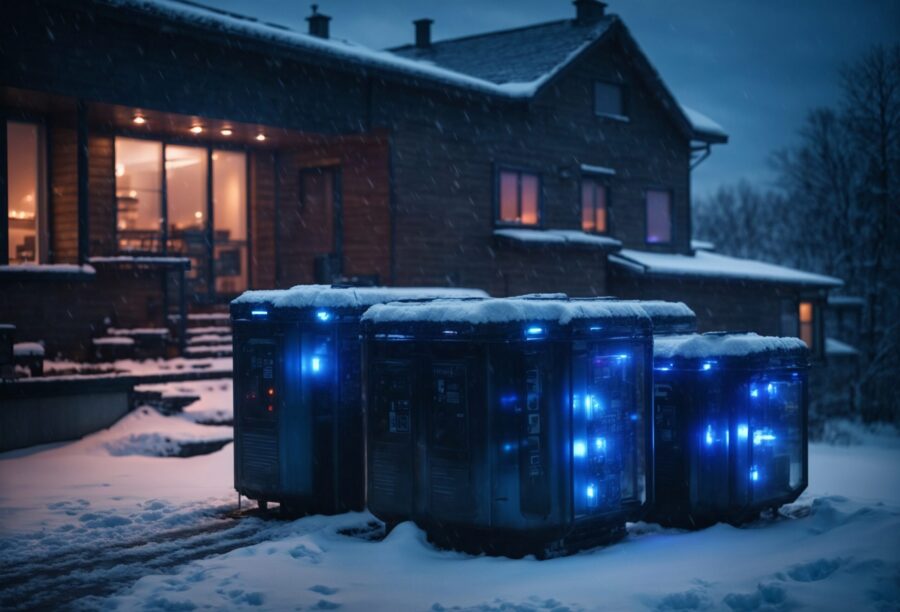
Action Line: If you want to keep the lights on, consider developing your own microgrid. Generators, solar, wind, and batteries can all add resilience to your power picture. You don’t want your family left in the dark. Click here to subscribe to my free monthly Survive & Thrive letter.
Read the entire series here.