You know that France’s streets are in turmoil, with rioting mobs burning historic sites and looting Paris’s famous shops. Now, wonders Joe Wallace in The Wall Street Journal, will the foreign lenders France relies on to sell its debt continue to put their faith in the country’s government bonds? He writes:
As France tries to restore order to the public finances and the streets, the government faces a significant financial challenge: an unusual reliance on foreign investors who no longer have a strong reason to come to its rescue.
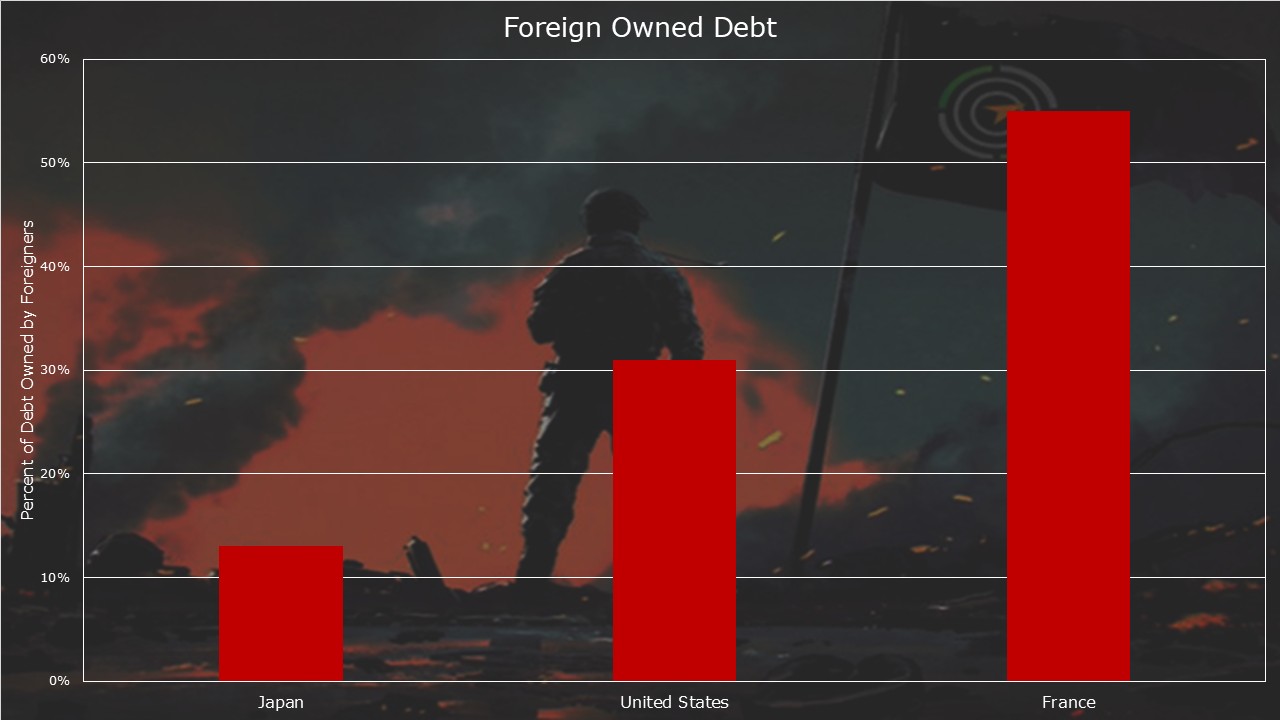
More than most other major economies, the French government depends on overseas lenders, especially in Japan, to fund its deficit. Almost 55% of French debt was owned outside the country last year, according to the European Union’s data service. In the U.S., the figure stood at 31% and in Japan, 13%.
Heavy reliance on foreign lenders for debt financing in good times is a sign that your debt is very desirable and the world has a strong view of your finances. In bad times, it can be a liability as foreign lenders seek to flee or avoid the fallout caused by your country’s troubles.
Of greatest danger to France may be the rapid rise in the yield demanded on its debt. Over the last three months, the yield on France’s 10-year government bonds has climbed 27.7%, faster by far than the 9.9% and 6.6% rates for the U.S. and Japan, respectively.
 France’s debt must be refinanced or paid off, and with low economic growth and high spending, deficits aren’t projected to disappear any time soon.
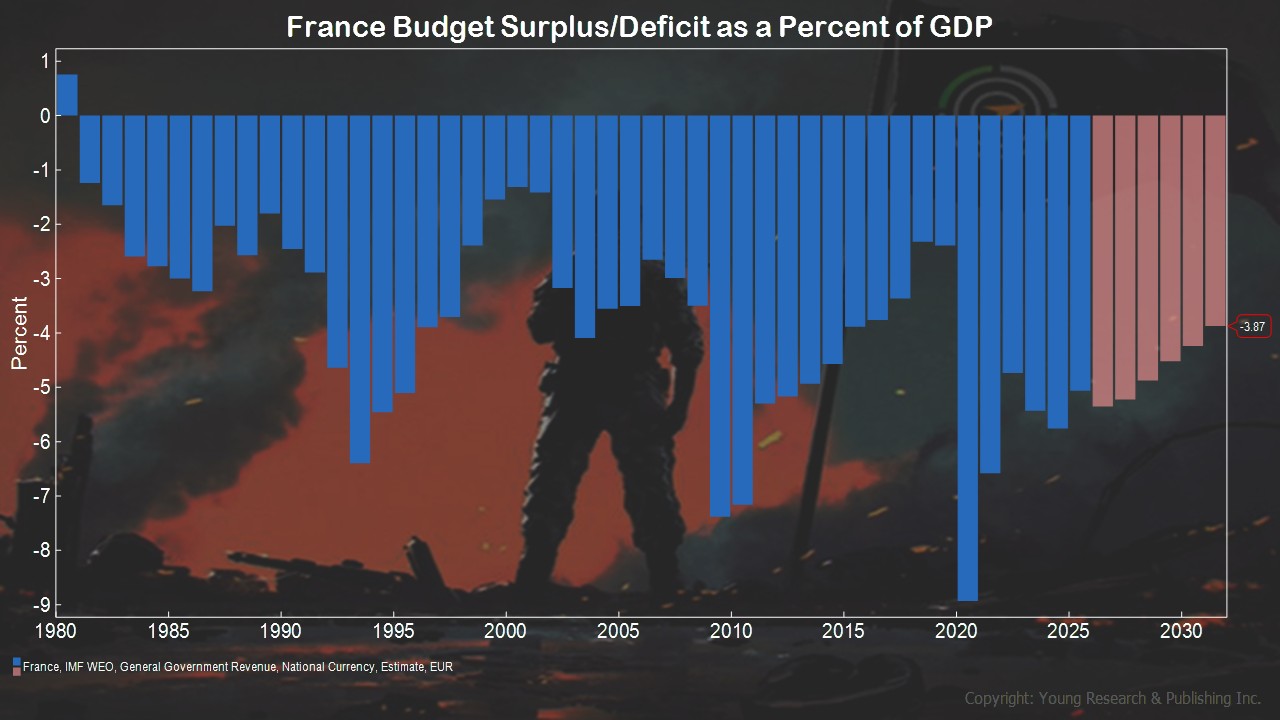
Without the ability to grow out of its debt, France will be stuck refinancing at higher rates, meaning a greater proportion of the country’s tax revenue will be used simply to pay off its debts, making its budget even harder to manage. In other words, the precursors of a debt trap.
Action Line: Your Survival Guy just recently returned from Paris. France’s plight is on my mind after witnessing the riots and violence firsthand. Click here to subscribe to my free monthly Survive & Thrive letter.