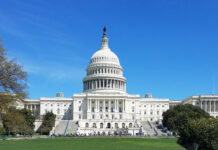
You know that the Senate passed an historic permitting reform bill last week. Now it awaits passage in the House, but it won’t make it out of the lower chamber of Congress before some Democrats attempt to water down its effects. The Democrats are pushing for an open amendment process in order to alter the bill that was already painstakingly negotiated in the Senate. Politico’s Andres Picon and Mia McCarthy report:
An open amendment process, which has become something of a rarity in the current Congress, could help get more Democrats on board. The House and Senate Democratic caucuses are both split on the bill due to concerns about potential environmental and tribal impacts, and lawmakers in both chambers have outlined proposed changes.
Some of the bill’s negotiators — Senate Energy and Natural Resources Chair Mike Lee (R-Utah), ENR ranking member Martin Heinrich (D-N.M.), Environment and Public Works Chair Shelley Moore Capito (R-W.Va.), and EPW ranking member Sheldon Whitehouse (D-R.I.) — have warned that changes to the text in the House could complicate the bill’s prospects.
America needs permitting reform, and the bill will pave the way for the nuclear renaissance and more energy production. The American Nuclear Society (ANS) is focused on four specific pieces of the bill that would aid in rebuilding America’s competitiveness in nuclear energy. The ANS explains:
Additions made to the permitting bill specifically address the licensing and transparency of nuclear projects, as well as the compensation of employees at the Nuclear Regulatory Commission. If this sounds familiar, that’s because the House passed six nuclear permitting bills this fall following extensive discussions during committee and markup hearings in the summer.
The Senate counterparts of four of these bills can be found in the amended version of BAAJA:
- A provision that would make uncontested hearings the NRC conducts in its licensing reviews optional instead of mandatory.
- A provision to allow the construction of a uranium enrichment facility to begin prior to license issuance by aligning the licensing requirements of these facilities with other fuel cycle facilities.
- A provision to better compensate NRC staff, giving the regulatory agency a better chance to compete against private nuclear industry employers.
- A provision that would require greater transparency from the Department of Energy in its authorization of reactors. This would require the secretary of energy to submit an annual report to the House Energy and Commerce and Senate Energy and Natural Resources committees detailing the DOE’s activities to authorize nuclear facilities during the previous calendar year.
Action Line: America needs an energy renaissance, not just nuclear, but all forms of energy production. Permitting reform can open the door to that energy renaissance. Click here to subscribe to my free monthly Survive & Thrive letter.