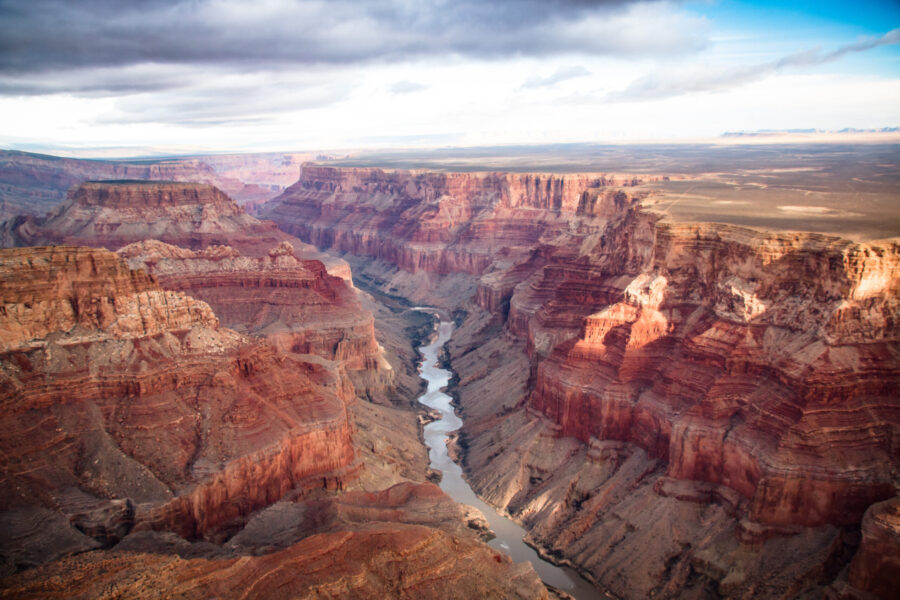
You have worked hard and reached retirement, now the only question is, where are you going first? There are plenty of places you want to see. You know Your Survival Guy is a fan of Paris, and Key West, FL, not to mention the mountains of New Hampshire. But some of America’s best locations are its national parks, and perhaps none is so impressive as the Grand Canyon. Share America explains the history of the Grand Canyon:
One of America’s great natural wonders, the Grand Canyon is visited by 5 million people each year. Visitors marvel at the chain of golden and red rock cliffs that seem to never end.
When President Theodore Roosevelt first saw the Grand Canyon in 1903, he proclaimed, “Leave it as it is. You cannot improve on it. The ages have been at work on it, and man can only mar it.” Roosevelt’s vision became a reality when the canyon in northern Arizona became a national park in 1919.
The Grand Canyon is picturesque any time of year. Summer sunshine emblazons colorful cliff walls. In winter, buttes and mesas are dusted with snow. The canyon’s vast expanse makes weather unpredictable. Temperatures can vary between -17 and 38 degrees Celsius (0 and 100 degrees Fahrenheit).
Activities include hiking the Bright Angel Trail to the canyon floor, rafting the Colorado River and spotting wildlife. Elk, deer and bighorn sheep all live in the park. The Grand Canyon is one of the few places to glimpse the rare California condor, North America’s largest land bird.
The Grand Canyon is divided into three main areas that are open to visitors: Grand Canyon West, the South Rim and the North Rim.
Grand Canyon West is home to the famous Grand Canyon Skywalk, one of the world’s largest glass bridges. Standing as high as a skyscraper relative to the canyon floor, the skywalk provides stunning panoramic views.
Though closed in winter for weather, the North Rim (open mid-May to mid-October) is less crowded than other access points. The North Rim’s Cape Royal and Angels Window areas are some of the only locations where visitors can capture a photo of both soaring rock formations and the Colorado River.
The South Rim offers similar year-round majestic scenes along with hiking trails and on-site information centers, including a museum. A vintage train departs daily to the South Rim from Williams, Arizona. Cowboy characters and musicians entertain during the two-hour journey.
Action Line: Don’t hesitate to take those trips. Spend your money a little foolishly, and see the world. Email me about your trips at ejsmith@yoursurvivalguy.com. And click here to subscribe to my free monthly Survive & Thrive letter.
Read the entire series here.