Dear Survivor,
How long will the war in the Persian Gulf last? That’s the question on everyone’s mind. The market isn’t sure as announcements of peace talks and progress on negotiations are regularly interrupted by new waves of attacks from both sides. President Trump announced on Truth Social that he would pause on his threat to destroy Iranian power infrastructure until April 6, writing:
As per Iranian Government request, please let this statement serve to represent that I am pausing the period of Energy Plant destruction by 10 Days to Monday, April 6, 2026, at 8 P.M., Eastern Time. Talks are ongoing and, despite erroneous statements to the contrary by the Fake News Media, and others, they are going very well. Thank you for your attention to this matter! President DONALD J. TRUMP
Despite that, attacks continue between Israel and Iran, and Israel’s defense minister has promised that its attacks on Iran will “escalate and expand.”
In response to the mixed signals, oil prices have been volatile. Investors should avoid making rash decisions in the face of market volatility. If you have a diversified portfolio and a solid plan that takes your risk tolerance into account, you’re prepared for some volatility.
Choke Point: Strait of Hormuz Strangled by War

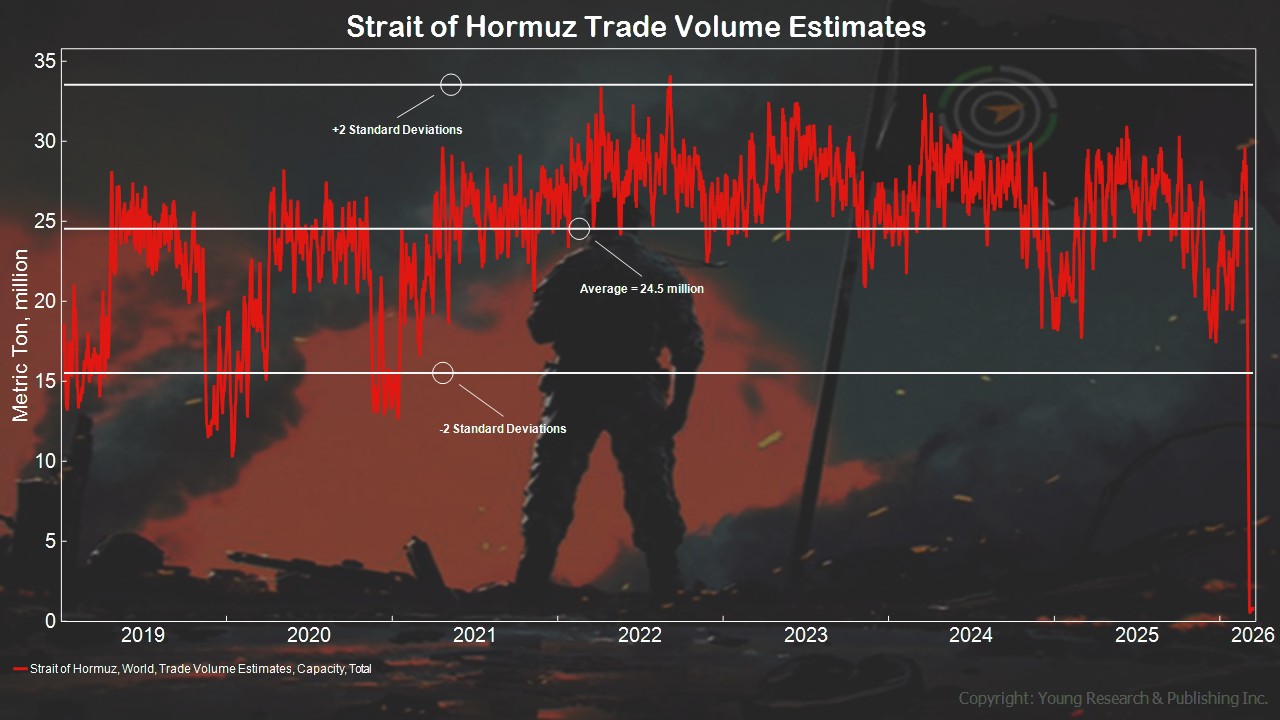
According to various estimates, the Strait of Hormuz is the transit point for between 20 million and 26 million barrels a day of crude oil. Since the war broke out, the capacity of oil transit through the strait has fallen to less than 1 million barrels a day. You can see on my chart that this drop is far below a negative two standard deviation difference from the average.
 According to the IEA, there is limited capacity for redirection, with pipelines in Saudi Arabia and the UAE able to move between 3.5 and 5.5 million barrels a day to avoid the strait.
 Even with those pipelines running at maximum capacity, a minimum of 75% of normal flows through the strait will be stranded.
It’s not just oil that flows through the strait either. Almost 20% of seaborne LNG supply flows through the strait as well. Asian markets depend heavily on that supply, mostly from Qatar, which has no alternate export route for the gas.
According to the IEA:
Bangladesh, India and Pakistan imported almost two-thirds of their total LNG supplies via the Strait of Hormuz in 2025, making them particularly vulnerable to potential disruptions to transit flows.
Moreover, natural gas dominates the power sector of Bangladesh and Pakistan, with gas-fired generation accounting for 50% and 25% of their electricity supply mix, respectively, in 2024. Inadequate LNG supplies would cause a deterioration of electricity supply security in those price sensitive markets and could lead to production curtailments in their gas-intensive industries, including fertilisers.
The effects of the supply shock would be felt well beyond the markets directly relying on Qatari and Emirati LNG, however. The shortfall in these supplies would naturally exacerbate the competition for spot LNG volumes and put strong upward pressure on spot LNG prices both in Asia and Europe. A supply shock of such magnitude will ultimately necessitate demand side adjustments, including minimising gas-fired generation in the power sector, mandated demand savings in public buildings and production curtailments in the gas- and energy-intensive industrial sectors.
Return of the Tanker Wars Rocks Oil
Iran has been attacking tankers heading through the Strait of Hormuz to put pressure on the United States and Israel to end their attacks.
JUST IN – American owned oil tanker struck by explosive drone boats near Iraqi waters, preliminary reports indicate — TankerTrackers pic.twitter.com/Tpu1tXje6u
— Disclose.tv (@disclosetv) March 11, 2026
Iran’s allies, the Houthis of Yemen, have also begun to attack shipping through the Red Sea to add additional pressure.
BREAKING: Houthis launch major Red Sea attack, striking the U.S.-linked oil tanker Chios Lion with drones and an unmanned surface vessel.#Europost pic.twitter.com/2Witu5aFcd
— EuroPost Agency (@EuroPostAgency) March 12, 2026
Iran has been capturing oil tankers as well. The Islamic Regime’s fast attack boats swarmed a Panamanian-flagged tanker, MV Niovi, and forced it into Iranian waters.
Another oil tanker captured by🇮🇷 Iran yesterday.
IRGCN fast-attack craft swarmed Panama-flagged oil tanker MV Niovi in the Strait of Hormuz, forcing the merchant vessel to reverse course into Iranian territorial waters during an unlawful seizure.
🇺🇸USN video pic.twitter.com/Qceum37ZDY
— Navy Lookout (@NavyLookout) May 4, 2023
This isn’t the first time Iran has used tanker attacks as a weapon of war. In 1987-1988, during the Iran-Iraq War, both countries made oil shipments and production a target. The Library of Congress recently explained in a report:
In the late 1980s, toward the end of the 1980-1988 Iran-Iraq War, Iranian forces laid mines throughout the Persian Gulf, including in the Strait of Hormuz, as part of the so-called “tanker war.” With the conflict largely stalemated on land, Iranian and Iraqi forces each attacked the other nation’s energy infrastructure in the Gulf, as well as tankers carrying oil from the other nation and from third countries.
The United States sought to deter such attacks and guarantee the free flow of energy commerce through the Gulf in a series of military operations, including the following:
- Operation Earnest Will (July 1987-September 1988), in which U.S. Navy vessels escorted Kuwaiti tankers re-flagged as U.S. vessels through the Gulf (one tanker struck a mine during the initial convoy);
- Operation Prime Chance (September 1987), in which U.S. special forces captured an Iranian vessel while it was laying mines (the vessel was later scuttled);
- Operation Nimble Archer (October 1987), in which U.S. naval forces and SEALs destroyed nonoperational oil platforms in retaliation for Iranian attacks on shipping with captured Iraqi Silkworm coastal defense cruise missiles; and
- Operation Praying Mantis (April 1988), in which U.S. forces attacked several Iranian oil platforms in retaliation for an Iranian mine attack that severely damaged a U.S. frigate, becoming engaged with Iranian naval forces in the largest U.S. Navy surface action since World War II.50
What Does This Mean for Investors?
Volatility in energy markets is rarely helpful. Researchers at the NBER found that oil price shocks and easy monetary policy were responsible for unemployment and inflation since 2010. They concluded:
We then show that our model does a good job of explaining unemployment and inflation since 2010, including the recent inflation surge that began in mid 2021 and has lasted through early 2023. We show that mainly accounting for this surge was a combination oil price shocks and ‘easy’ monetary policy, even after allowing for demand shocks and shocks to labor market tightness.
Inflation and unemployment are macroeconomic trends that investors are not usually excited to see.
There’s Nothing Wrong with Making Money Slowly
You and I know there’s nothing wrong with making money slowly. That’s important to remember amidst all the fast-paced action in places like the Persian Gulf. When you make money slowly, you set your course by doing what you know how to do. You go to work. And one day, you realize you don’t need to work anymore. It’s nice realizing you’re a rich man.
But what’s nice about your journey is that you didn’t kill yourself doing it. You didn’t sail into every storm. You picked your battles. And for that, your boat isn’t in tatters from the journey. You took care of it, and now you have the luxury of enjoying your retirement life without being broken.
Your Survival Guy looks at making money slowly as the Fountain of Youth because when you take care of yourself along the way, you still have a bright future ahead of you. And the bonus here is that if you don’t want to deal with managing your money on your own, you can steal time, a most valuable asset, and have someone else do it for you.
In a world where being at your service is an even rarer commodity, Your Survival Guy is, in fact, at your service. Let me give you my time so you can choose what you want to do and when you want to do it. Email me at ejsmith@yoursurvivalguy.com.
Survive and Thrive this month.
Warm regards,

“Your Survival Guy”
- If someone forwarded this to you, and you want to learn more about Your Survival Guy, read about me here.
- If you would like to contact me and receive a response, please email me at ejsmith@yoursurvivalguy.com.
- Would you like to receive an email alert letting you know when Survive and Thrive is published each month? You can subscribe to my free email here.
P.S. I received this email from a client in the Pacific Northwest who fought the good fight but ultimately gave in and bought a boat. Nice! It’s a classic Grady-White with a Yamaha 300hp. “I fought this battle for years,” he writes, “and finally lost.”
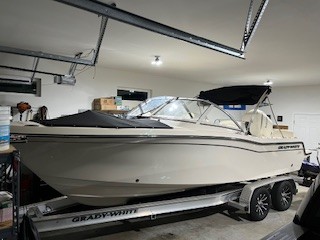
He continued, explaining that his wife pushed the issue, “The rest of the story is that I thought of you primarily because she bought a Grady-White. Not that I’m a boat expert, but I had never heard of that brand until I read your “How to Buy a Boat” series several years ago. As I said, it’s a Freedom 215 (21’ w/300 hp Yamaha). Should be plenty of boat for Puget Sound/Salish Sea and plenty of power to get somewhere quickly if need be.”
“I’m not great at pictures, but here are a couple. The first one is from the maiden voyage on the GW on Sunday. The Olympic Mountains in the background. Decent weather then, but had all types in the couple of hours out there.”

“The second one is from yesterday. A friend owns and operates a guide boat on some local rivers. Had a pretty good day catching steelhead.”

Read the entire How to Buy a Boat series here.
P.P.S. California has suffered a net out-domestic migration of four million residents since 2000, and those who have remained are aging quickly. Joel Kotkin explains on his Substack:
California’s aging is accelerating, too. From 2010 to 2018, the state aged 50 percent more rapidly than the rest of the country, according to the American Community Survey. Since 2020, notes Cox, the state’s under-25 population has dropped considerably more than the national average, while its ranks of boomers have grown 10 percent more quickly. The state’s median age was 28 in 1970; it will be over 45 by 2060, according to a report from the state’s Little Hoover Commission. Since Californians’ life expectancy is among the nation’s highest, the elderly are likely to stay around for a long time. The California Department of Aging projects that one in four Californians will be over 60 by 2040.
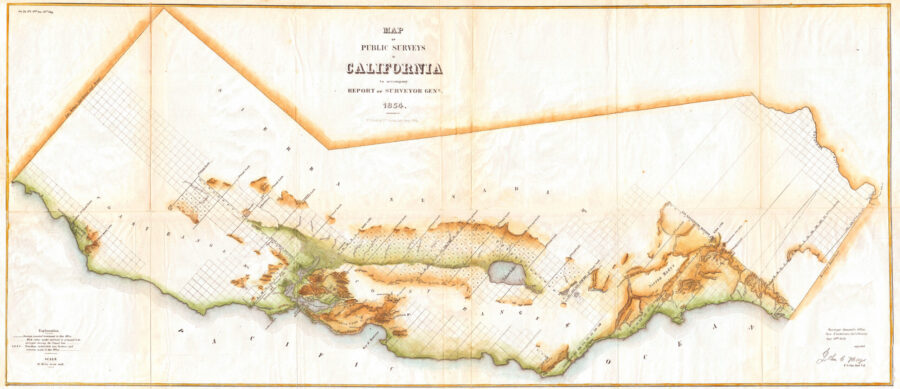
It’s no surprise to anyone paying attention. California’s radical politicians have implemented policies that make it more expensive to live or do business in the state. When residents are mistreated in one state, they often find their way to where they, and their money, are treated best. If you’re looking for a change, begin your search with Your Survival Guy’s recently released 2026 Super States ranking.
P.P.P.S. You have been reading about private funds limiting redemptions and the dangers private equity and credit could pose to retirement investors in my ongoing series Private Equity Is the Next Big Thing Coming for YOU. With trouble in the market for private equity and credit, Greg Ip of The Wall Street Journal examines whether or not a collapse would be as devastating as the Financial Crisis. Ip worries that financial engineering has tied private credit to other parts of the economy. He writes:
Banks have tripled lending to private equity and credit since 2018 to over $300 billion, part of a broader expansion of lending to financial companies. As a result, funds that invest in highly leveraged companies have themselves become leveraged.
To be sure, banks’ exposure is small relative to their total assets. Many have protected themselves through “synthetic risk transfers,” under which they retain the loan but pay someone such as a hedge fund to take the hit if the loan defaults. The IMF estimates that banks worldwide have transferred the risk on $1 trillion of assets (not just private credit) this way.
Nonetheless, this ties private credit more closely to other parts of the financial system. For example, a hedge fund might borrow from one bank to take on the credit risk from another bank. These linkages raise “potential contagion risks,” the IMF said.
The IMF explained in 2024 that while private risks remained contained, there are vulnerabilities in the sector, and listed some vulnerabilities that could become systemic, writing:
- Borrowers’ vulnerabilities could generate large, unexpected losses in a downturn. Private credit is typically floating rate and caters to relatively small borrowers with high leverage. Such borrowers could face rising financing costs and perform poorly in a downturn, particularly in a stagflation scenario, which could generate a surge in defaults and a corresponding spike in financing costs.
- These credit losses could create significant capital losses for some end investors. Some insurance and pension companies have significantly expanded their investments in private credit and other illiquid investments. Without better insight into the performance of underlying credits, these firms and their regulators could be caught unaware by a dramatic rerating of credit risks across the asset class.
- Although currently low, liquidity risks could rise with the growth of retail funds. The great majority of private credit funds poses little maturity transformation risk, yet the growth of semiliquid funds could increase first-mover advantages and run risks.
- Multiple layers of leverage create interconnectedness concerns. Leverage deployed by private credit funds is typically limited, but the private credit value chain is a complex network that includes leveraged players ranging from borrowers to funds to end investors. Funds that use only modest amounts of leverage may still face significant capital calls in a downside scenario, with potential transmission to their leverage providers. Such a scenario could also force the entire network to simultaneously reduce exposures, triggering spillovers to other markets and the broad economy.
- Uncertainty about valuations could lead to a loss of confidence in the asset class. The private credit sector has neither price discovery nor supervisory oversight to facilitate asset performance monitoring, and the opacity of borrowing firms makes prompt assessment of potential losses challenging for outsiders. Fund managers may be incentivized to delay the realization of losses as they raise new funds and collect performance fees based on their existing track records. In a downside scenario, the lack of transparency of the asset class could lead to a deferred realization of losses followed by a spike in defaults. Resulting changes to the modeling assumptions that drive valuations could also cause dramatic markdowns.
- Risks to financial stability may also stem from interconnections with other segments of the financial sector. Prime candidates for risk are entities with particularly high exposure to private credit markets, such as insurers influenced by private equity firms and certain groups of pension funds. The assets of private-equity-influenced insurers have grown significantly in recent years, with these entities owning significantly more exposure to less-liquid investments than other insurers. Data constraints make it challenging for supervisors to evaluate exposures across segments of the financial sector and assess potential spillovers.
- Increasing retail participation in private credit markets raises conduct concerns. Given the specialized nature of the asset class, the risks involved may be misrepresented. Retail investors may not fully understand the investment risks or the restrictions on redemptions from an illiquid asset class.
Pay close attention to the third bullet point and the last bullet point. Those two are directly intertwined with Your Survival Guy’s recent warnings. When private equity and credit are inevitably shuffled into your 401(k), be very cautious. When you want to give yourself greater options, email me at ejsmith@yoursurvivalguy.com, and I can help you with an IRA rollover.

Download this post as a PDF by clicking here.