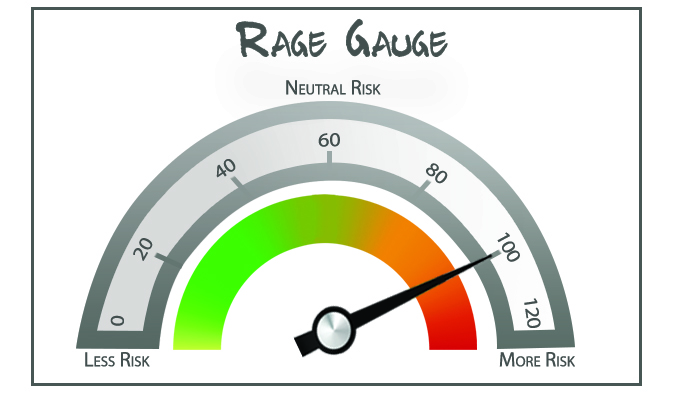
Your Survival Guy’s latest Rage Gauge is in, and I thought it useful for us to look at the lay of the land before the current oil spike. When it comes to oil, just like when it comes to the direction of interest rates, I don’t like being in the prediction business. Instead, I’m comfortable getting my portfolio aligned with my risk tolerance, or lack thereof, before the chaos begins.
Take a look at the University of Michigan’s Consumer Sentiment Index. It was just beginning to recover from some pretty low readings. Increasing energy prices tend to upset consumers.
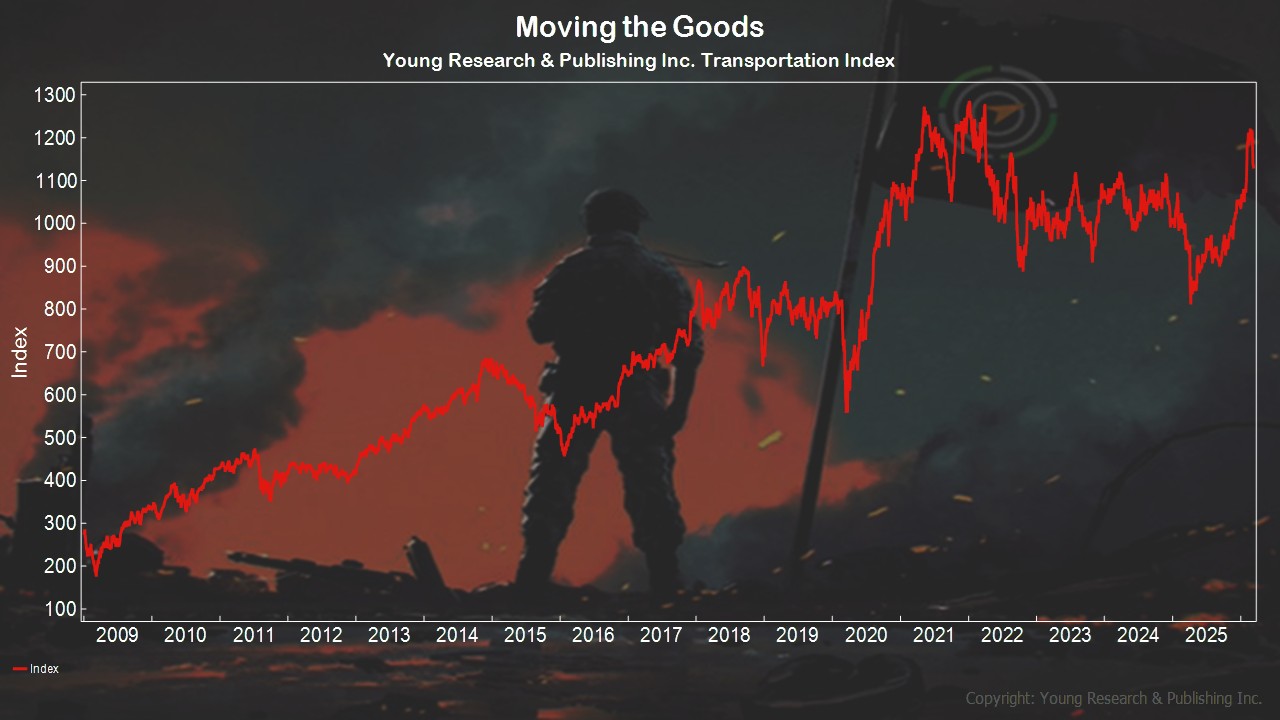
 After building a strong recovery from the Biden years through 2025, Young Research’s Moving the Goods index has fallen a bit from early 2026 highs.
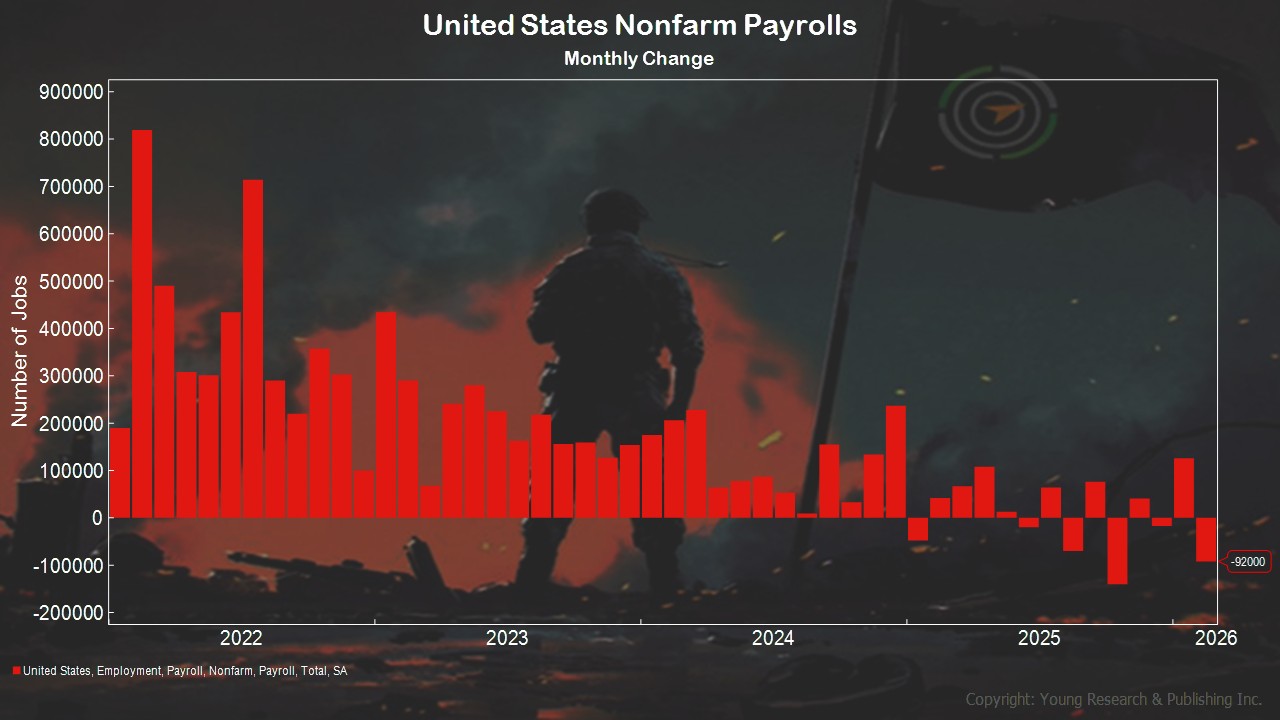
 Despite the Federal Reserve cutting rates a number of times over the last two years, employment can’t seem to put together a solid direction. The most recent employment report recorded non-farm payrolls that dropped by 92,000. There haven’t been two consecutive months of economic growth since May 2025.
 Despite the shaky look at overall employment, private employment as measured by ADP has continued to grow. That could indicate that some of the job losses in the government’s nonfarm payroll employment report could be government jobs cut as part of the Trump administration’s efforts to downsize the bloated federal budget.
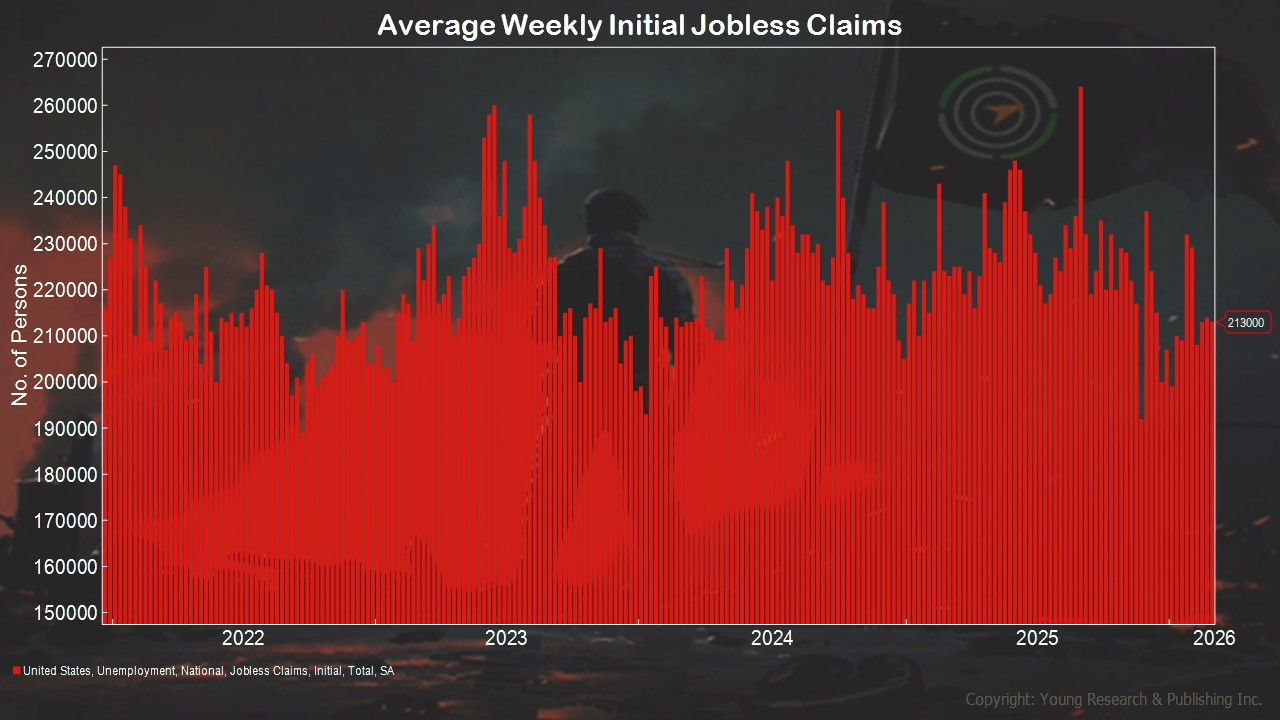
 Another indicator that the job market is holding up is the still very low average weekly initial jobless claims.
In the face of new hostilities in the Persian Gulf, Americans are worried about higher oil prices and the impact they will have on their families’ finances.
Return of the Tanker Wars Rocks Oil

War in the Persian Gulf between Israel, allied with the United States, and Iran has led to energy flow disruptions in the world’s most vital waterway. Oil prices have surged in response to Iran’s attacks on tankers traversing the Strait of Hormuz, the narrow point connecting the Persian Gulf to the Gulf of Oman.
Before hostilities began, oil had settled into a range between $55 and $65 a barrel, more or less. Since the fighting began, prices for WTI crude oil have climbed to over $90/barrel.

Iran has been attacking tankers heading through the Strait of Hormuz to put pressure on the United States and Israel to end their attacks.
JUST IN – American owned oil tanker struck by explosive drone boats near Iraqi waters, preliminary reports indicate — TankerTrackers pic.twitter.com/Tpu1tXje6u
— Disclose.tv (@disclosetv) March 11, 2026
Iran’s allies, the Houthis of Yemen, have also begun to attack shipping through the Red Sea to add additional pressure.
BREAKING: Houthis launch major Red Sea attack, striking the U.S.-linked oil tanker Chios Lion with drones and an unmanned surface vessel.#Europost pic.twitter.com/2Witu5aFcd
— EuroPost Agency (@EuroPostAgency) March 12, 2026
Iran has been capturing oil tankers as well. In the video below, the Islamic Regime’s fast attack boats swarm a Panamanian-flagged tanker, MV Niovi, and force it into Iranian waters.
Another oil tanker captured by🇮🇷 Iran yesterday.
IRGCN fast-attack craft swarmed Panama-flagged oil tanker MV Niovi in the Strait of Hormuz, forcing the merchant vessel to reverse course into Iranian territorial waters during an unlawful seizure.
🇺🇸USN video pic.twitter.com/Qceum37ZDY
— Navy Lookout (@NavyLookout) May 4, 2023
This isn’t the first time Iran has used tanker attacks as a weapon of war. In 1987-1988, during the Iran-Iraq War, both countries made oil shipments and production a target. The Library of Congress recently explained in a report:
In the late 1980s, toward the end of the 1980-1988 Iran-Iraq War, Iranian forces laid mines throughout the Persian Gulf, including in the Strait of Hormuz, as part of the so-called “tanker war.” With the conflict largely stalemated on land, Iranian and Iraqi forces each attacked the other nation’s energy infrastructure in the Gulf, as well as tankers carrying oil from the other nation and from third countries.
The United States sought to deter such attacks and guarantee the free flow of energy commerce through the Gulf in a series of military operations, including the following:
- Operation Earnest Will (July 1987-September 1988), in which U.S. Navy vessels escorted Kuwaiti tankers re-flagged as U.S. vessels through the Gulf (one tanker struck a mine during the initial convoy);
- Operation Prime Chance (September 1987), in which U.S. special forces captured an Iranian vessel while it was laying mines (the vessel was later scuttled);
- Operation Nimble Archer (October 1987), in which U.S. naval forces and SEALs destroyed nonoperational oil platforms in retaliation for Iranian attacks on shipping with captured Iraqi Silkworm coastal defense cruise missiles; and
- Operation Praying Mantis (April 1988), in which U.S. forces attacked several Iranian oil platforms in retaliation for an Iranian mine attack that severely damaged a U.S. frigate, becoming engaged with Iranian naval forces in the largest U.S. Navy surface action since World War II.50
What Does This Mean for Investors?
Volatility in energy markets is rarely helpful. Researchers at the NBER found that oil price shocks and easy monetary policy were responsible for unemployment and inflation since 2010. They concluded:
We then show that our model does a good job of explaining unemployment and inflation since 2010, including the recent inflation surge that began in mid 2021 and has lasted through early 2023. We show that mainly accounting for this surge was a combination oil price shocks and ‘easy’ monetary policy, even after allowing for demand shocks and shocks to labor market tightness.
Inflation and unemployment are macroeconomic trends that investors are not usually excited to see.
Action Line: What can you do? Make a plan that acknowledges your risk tolerance and understands that your tolerance will be tested by events. Many investors find that their tolerance for risk is a lot lower than they thought, only after it’s been tested. Once you have a plan in place that takes into account your goals and risk tolerance, stick to it. When you want to build a plan for your portfolio, email ejsmith@yoursurvivalguy.com. And click here to subscribe to my free monthly Survive & Thrive letter.