Rates are rising in the face of inflation and uncertainty abroad, and that could add to America’s debt burden. The Committee for a Responsible Federal Budget writes:
Interest costs will exceed $1 trillion this year and have nearly tripled from $345 billion in Fiscal Year (FY) 2020. By FY 2036, the Congressional Budget Office (CBO) projects that interest payments will be double what they are today and surpass $2.1 trillion. We estimate that using CBO’s interactive tool on economic conditions, an alternative scenario in which yields on Treasury securities rise above baseline projections could result in interest payments being trillions higher over the next decade.
For example, if interest rates were remain above projections this year and be 1.0 percentage point above projections through the decade – bringing the 10-year Treasury note from an average 4.3% over the decade to 5.3% – it would add an additional $3.5 trillion to the debt above projections. By 2036, interest costs would total $2.7 trillion – nearly 6% of Gross Domestic Product (GDP). Debt held by the public would rise close to 128% of GDP, compared to 120% under current law projections.
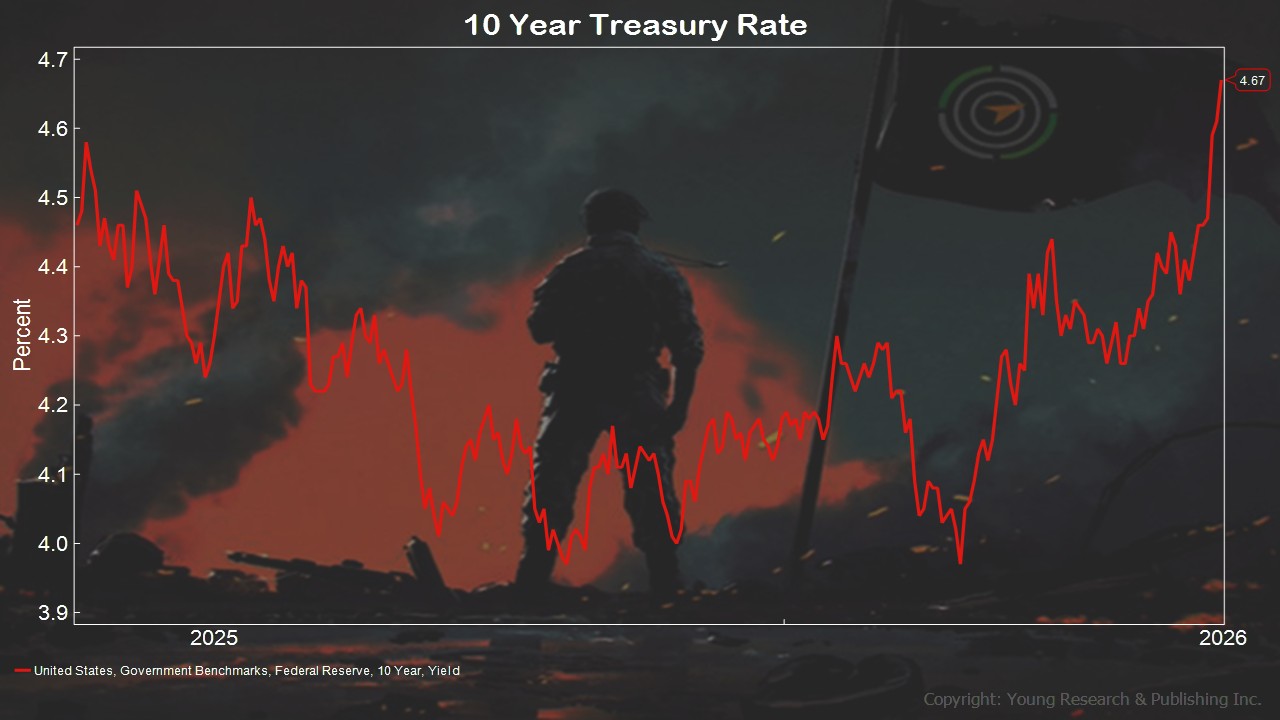
You can see on my chart that the rate on 10-year Treasuries has risen to 4.67%.
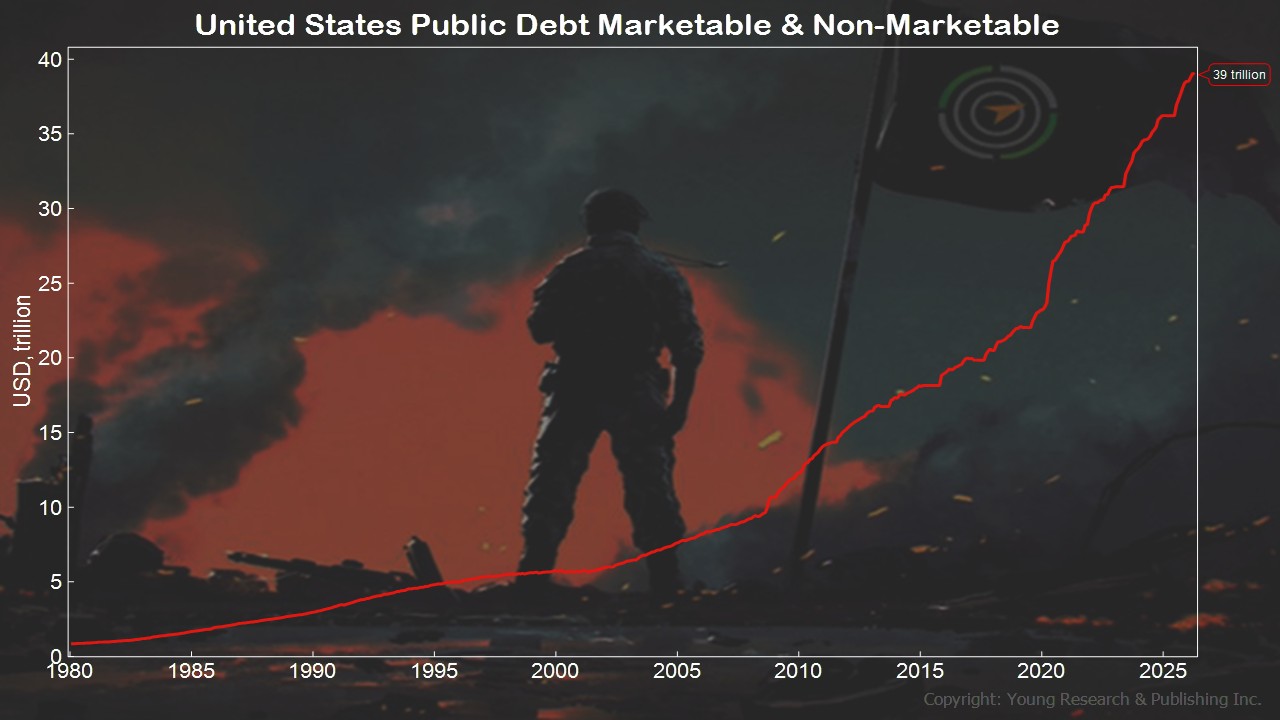
Along with higher rates, the American government continues to pile on additional debt.
 Action Line: Click here to subscribe to my free monthly Survive & Thrive letter.