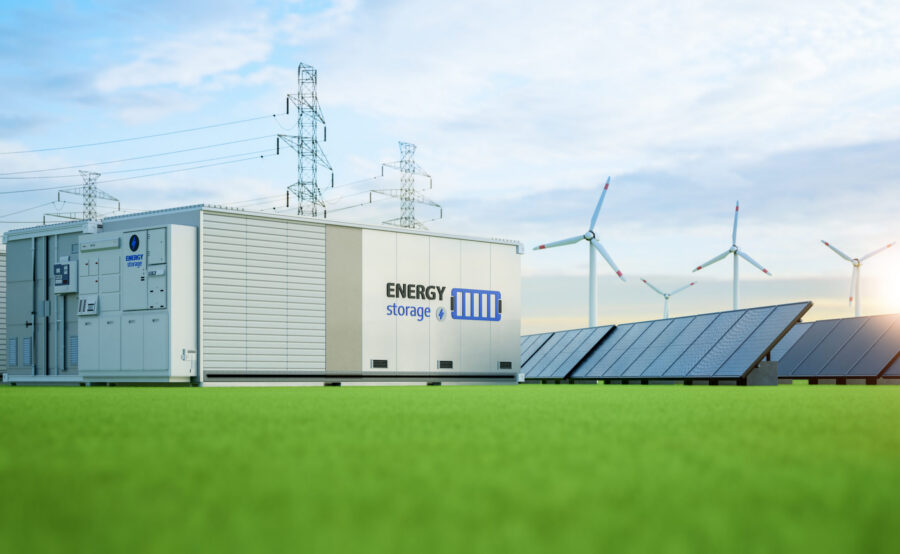
You know Your Survival Guy wants you to put some power away in the pantry (battery storage) for a rainy day. But that doesn’t mean I want you abandoning fossil fuels for solar and wind alone. A mix makes your life easier and your power more reliable, which is YSG’s ultimate goal: reliability.
The amount of renewable energy generation and battery storage you’d need to maintain normal power consumption without grid connection or generator backups would be a massive investment in overcapacity. And it’s not just for homeowners, it’s for the grid too. The National Center for Energy Analytics ran the numbers on wind and solar-powered batteries for one of the largest grids in America (PJM) and found that it doesn’t make sense at scale either. They write:
Can electric grids that are powered primarily by wind and solar power provide reliable and affordable electricity when coupled with battery storage? Although advocates insist that it is feasible, this study demonstrates that a wind-solar-battery policy to meet electricity demand is physically implausible, cost-prohibitive, and unjustifiable on the basis of goals to reduce CO2 emissions.
While the quantity of battery storage has grown rapidly, it remains a minuscule share of total U.S. electricity consumption. At the beginning of 2026, total grid-scale battery storage could supply about 15 minutes of average U.S. electricity demand.
This study evaluated the physical and economic feasibility of building a reliable electric system primarily powered by wind, solar, and battery storage. The analysis used a model of the PJM Interconnection system, the nation’s largest grid operator, which covers 13 states and the District of Columbia and serves more than 67 million people.
Using PJM’s long-term forecast through 2045, the study estimated the quantities of wind, solar, and storage batteries that would be needed under three scenarios: renewables only (RO), which consisted of wind, solar, batteries, and existing nuclear plants while retiring all coal and natural gas generation; natural gas and nuclear (NGN), which comprised existing and new natural gas generators along with new nuclear plants; and NGN+B, which added battery storage to replace gas-fired generators during peak demand periods.
The analysis showed that to compensate for the intermittency of solar and wind, roughly tenfold more total generating capacity would be required by 2045 under the RO scenario than the NGN scenario. The additional capacity would be needed not only to serve daily or seasonal variations in supply and demand but also to accommodate well-documented wind and solar droughts—that is, multiday periods with little to no sunshine or wind.
The study also estimated the total ratepayer electricity costs. For the RO scenario, the total costs paid by PJM ratepayers over the next 20 years would exceed $4 trillion—even after accounting for savings on fossil fuels (see table ES-1).
Action Line: Obviously, your household has differences when compared to the PJM grid, but the principles are the same. Unless you’re willing to buy way more capacity than necessary, include a whole-house generator in your power pantry plans. Take the time to investigate what will work best for your situation. Click here to subscribe to my free monthly Survive & Thrive letter.
Read the entire series here.